Compass Points and the Old Rose
Naming the wind
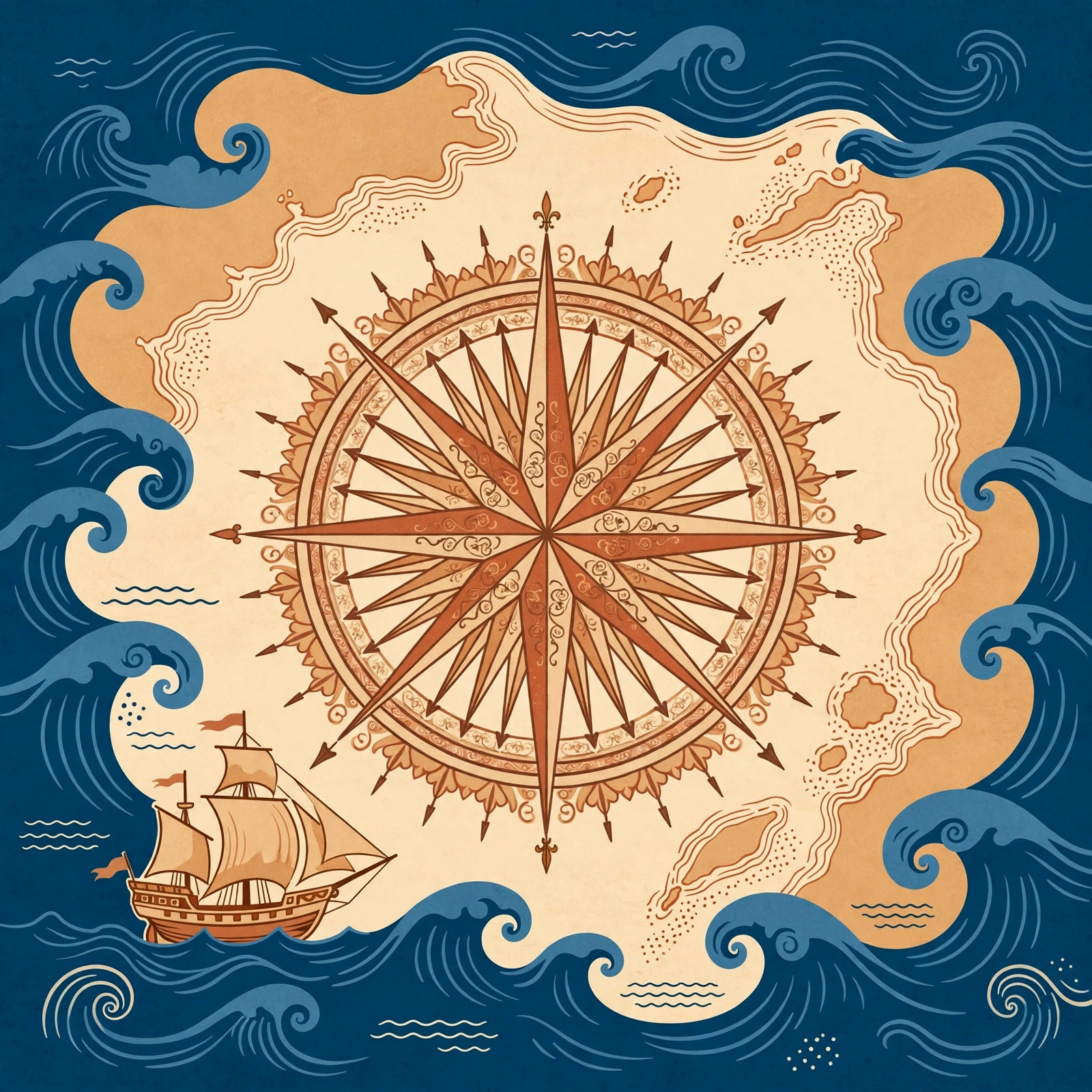
Before instruments, direction was language. The compass rose divided the circle into named points, and a helmsman steered by names: north east, east north east, east by north. The full traditional rose has 32 points, each 11.25 degrees apart, built by halving again and again: the four cardinal points, the four intercardinal between them, the eight half winds between those, and the sixteen quarter winds completing the set. A trained sailor could name any heading instantly and hear a course order without a number in it, in any weather, in the dark, by feel of the card.The points carry poetry in their names: the old Mediterranean winds behind them include Tramontana from the north and Sirocco from the south east, directions named for the weather they delivered.
The sixteen point working rose
Most modern uses settle for sixteen points, the set this site uses: the cardinals and intercardinals plus the secondary points such as north north east and south south west, each covering a slice of 22.5 degrees centred on its exact bearing. Weather forecasts still speak this language when they say the wind will veer south south west, and walkers use it for directions that do not justify false precision. The slices matter: a bearing of 148 degrees is south east at a glance but, checked against the rose, sits just inside south south east, whose slice begins at 146.25 degrees.Boxing the compass, reciting the 32 points in order and back, was a standard test of an apprentice seaman, and old hands could still perform it decades after leaving the sea. A wind described as backing or veering between these points tells an experienced listener the whole story of a passing weather system.
Points in the age of numbers
Degrees won because machines prefer numbers, but points survive wherever humans talk. Air traffic uses degrees; the shipping forecast uses points and plain words. Hikers describe a ridge as running north west; sailors box the compass, reciting all 32 points in order, as a rite of training. The compass point finder on this site converts any bearing to its sixteen point name, a small bridge between the numbered world of the chart plotter and the spoken world of the forecast, the logbook and the hill.Modern forecasts blend the languages happily, giving a point for the story and degrees for the data, which is exactly the bilingual habit this site tries to keep.