Grid References and Map Squares
Addresses for places without addresses
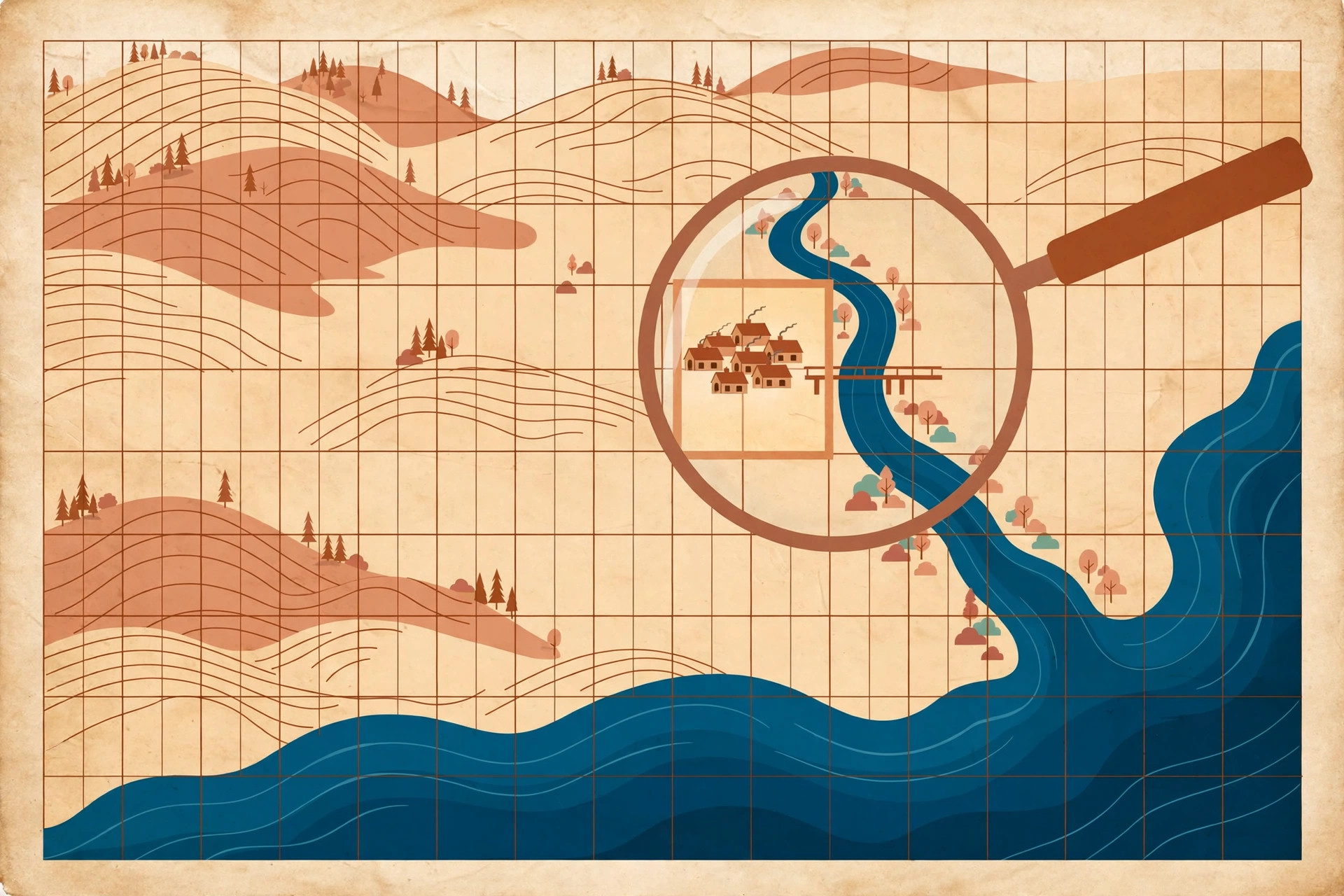
A grid reference names a square of ground rather than a point, using the lettered grid printed over national mapping. In Britain the system divides the country into 100 kilometre squares with two letter codes, then subdivides by numbers east and north. A four figure reference names a one kilometre square; six figures narrow it to 100 metres; eight figures to 10 metres. Mountain rescue teams ask for six figures because that is precise enough to find a casualty and coarse enough to read correctly over a crackly phone line from a cold hillside.The letters matter as much as the numbers: omitting them can place the same numbers in a different 100 kilometre square entirely, which is why rescuers insist on the full reference, letters first.
Eastings before northings
The universal rule is along the corridor, then up the stairs: read the eastward number first, then the northward one. Swapping them is the classic beginner error and can move the square by kilometres. Within a square, the numbers measure from its south west corner, so a reference is an instruction to start at the corner and walk so far east, then so far north. Because the reference names a square, it never pretends to more accuracy than it has, which is its quiet advantage over a long decimal coordinate read out digit by digit under stress.Surveyors work to finer grids still, quoting references to the metre for boundaries and utilities, where the square named by the reference is the size of a desk.
Grids in the digital age
Latitude and longitude have largely taken over on phones, but grids survive wherever paper maps rule, and they have digital cousins: the bounding boxes that map software uses to fetch data are grid references by another name, rectangles named by their edges. Hikers are also adopting three word and code based systems for voice communication. Whichever system you use, the habits are the same: state the system, read in the agreed order, and confirm by reading back. The bounding box calculator on this site shows the rectangle idea in its purest form, four edges around any centre you choose.Whatever the system, read a reference back to the person who gave it. That ten second habit, borrowed from aviation, quietly prevents most of the disasters that references are invented to avoid.