Hectares, Acres and the Units of Land
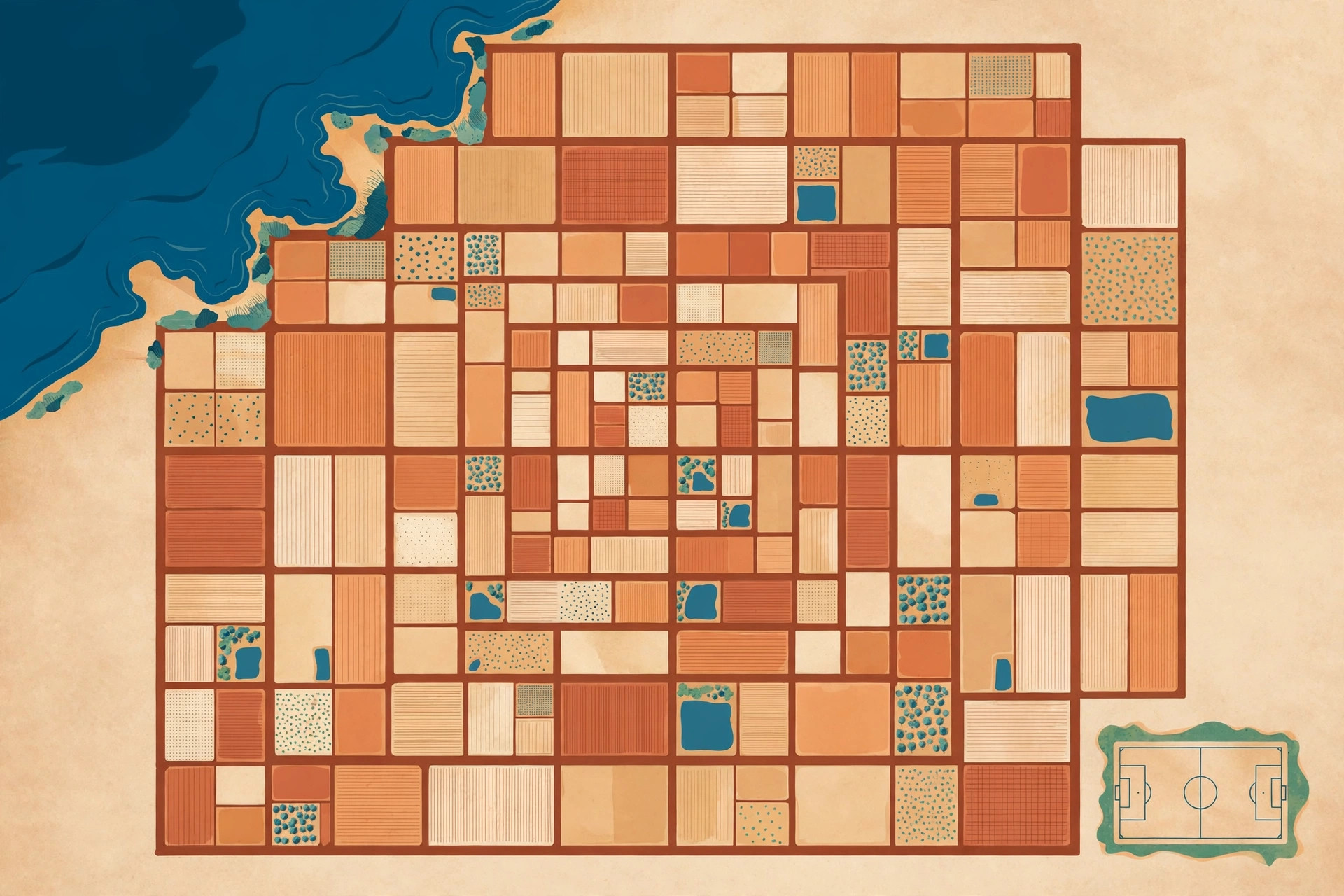
The hectare, a metric acre
The hectare is the workhorse of land measurement in most of the world. It is a square with sides of 100 metres, so it holds exactly 10,000 square metres, and a square kilometre holds exactly 100 of them. Farmers, foresters and planners think in hectares because the numbers stay human sized: a farm is 80 hectares, a wood is 12, a housing estate is 3. Its metric neatness is no accident; the unit was designed with the metre in the 1790s, though the name comes from the older are, a 10 metre square that never quite caught on by itself.Other local units linger in pockets: the Spanish speaking world still meets the manzana, parts of Asia the mu and the bigha, and old British deeds the rood and the perch, each with its own local size.
The acre and its long memory
The acre is older and stranger. It began as the amount of land a yoke of oxen could plough in a day, and was standardised as a strip one furlong long and one chain wide, 4,046.86 square metres in modern terms. Britain and the United States still sell land in acres, and the unit survives in phrases and in the sizing of everything from vineyards to nature reserves. One acre is about 0.405 hectares, and a hectare is about 2.47 acres. An American football field, end zones included, is about 1.32 acres, which is why sports pages reach for it as a unit readers can picture.Prices make the conversions vivid. Land quoted per acre and land quoted per hectare differ by a factor of about two and a half before any negotiation starts, which has ambushed more than one cross border buyer.
Choosing and converting units
Confusion between units has real costs: a decimal point in the wrong unit can misprice a farm or misstate a nature reserve by a factor of two and a half. The safe habit is to convert everything into one unit before comparing, and to keep the original figure beside the conversion. Square kilometres suit countries and counties, hectares suit farms and forests, square metres suit plots and buildings, and acres suit audiences in Britain and America. The area converter on this site shows a figure in all of these at once, which makes the relationships easy to absorb and the mistakes easy to catch.A pocket rule covers most cases: hectares to acres, multiply by two and a half and adjust down slightly; acres to hectares, multiply by 0.4. For anything involving money, use the converter and keep both figures in writing.