How Flight Times Are Estimated
The core of the estimate
Strip away the timetable and a flight time is one division: distance over speed. A jet airliner cruises near 880 kilometres per hour, so the 5,570 kilometres from London to New York give about six hours and twenty minutes of cruising. Add the slower climb and descent, taxiing at both ends and the little detours of real airways, and a working estimate lands near seven hours. That is the whole method of the estimator on this site: great circle distance, cruise speed, and a half hour allowance for everything that is not cruising. It will rarely be exact, and it will rarely be far wrong.Helicopters and propeller aircraft cruise far slower, near 250 and 500 kilometres per hour respectively, so the same estimator with the right speed setting gives sensible answers for them too.
Why airlines pad the timetable
The published time for a flight, the block time from doors closed to doors open, is consistently longer than the same flight took a generation ago on the same route. Airlines pad schedules because late arrivals are expensive: missed connections, compensation, crews running out of legal hours. A padded timetable absorbs congestion and still arrives on time, which is why so many flights now land early on a good day. When you compare your estimate with the booking page, expect the airline figure to sit above the physics, especially into busy hubs at busy hours.Concorde remains the extreme case: at over 2,100 kilometres per hour it crossed the Atlantic in about three and a half hours, arriving in New York at an earlier local time than it left London.
Winds, seasons and direction
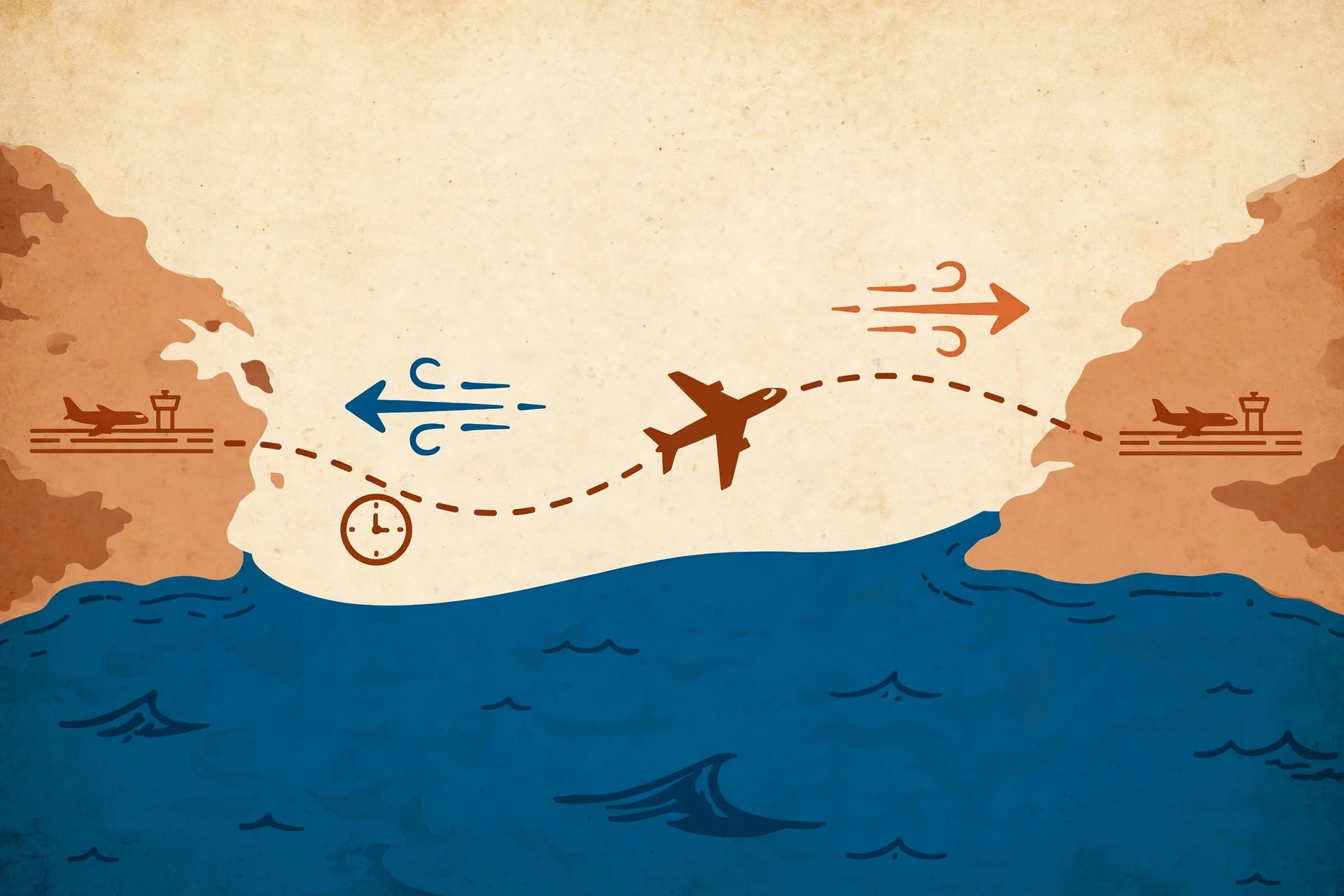
The same route can differ by an hour between directions. The North Atlantic jet stream blows eastward, so New York to London often takes about six and a half hours while the return takes seven and a half. Winter strengthens the stream and widens the gap; summer narrows it. Pilots plan each crossing on the day winds, choosing tracks that surf the flow eastbound and dodge it westbound. An estimator that ignores wind is giving you the still air answer, the fair baseline from which the day weather will argue, which is exactly what you want for planning connections and judging claims.For planning, estimate the still air time, then ask what the season does to it: that two step habit will beat most published guesses and will tell you which connections are brave and which are sound.