Nautical Miles and Knots: The Sailor Units
A mile cut from the planet
Most units are arbitrary; the nautical mile is geography. It is defined as one minute of arc along a meridian, one sixtieth of a degree of latitude, so the whole circumference of the Earth is exactly 21,600 nautical miles. A navigator who measures a distance in nautical miles can read it straight off the latitude scale at the edge of the chart, no conversion needed. In 1929 the length was fixed internationally at exactly 1,852 metres, close to the average minute of latitude, which varies a little because the Earth is not a perfect sphere.The land mile, by contrast, descends from Roman paces and was fixed by statute in England, which is why the two miles differ and why confusing them at sea is a genuine hazard.
The knot, a speed with a rope in its past
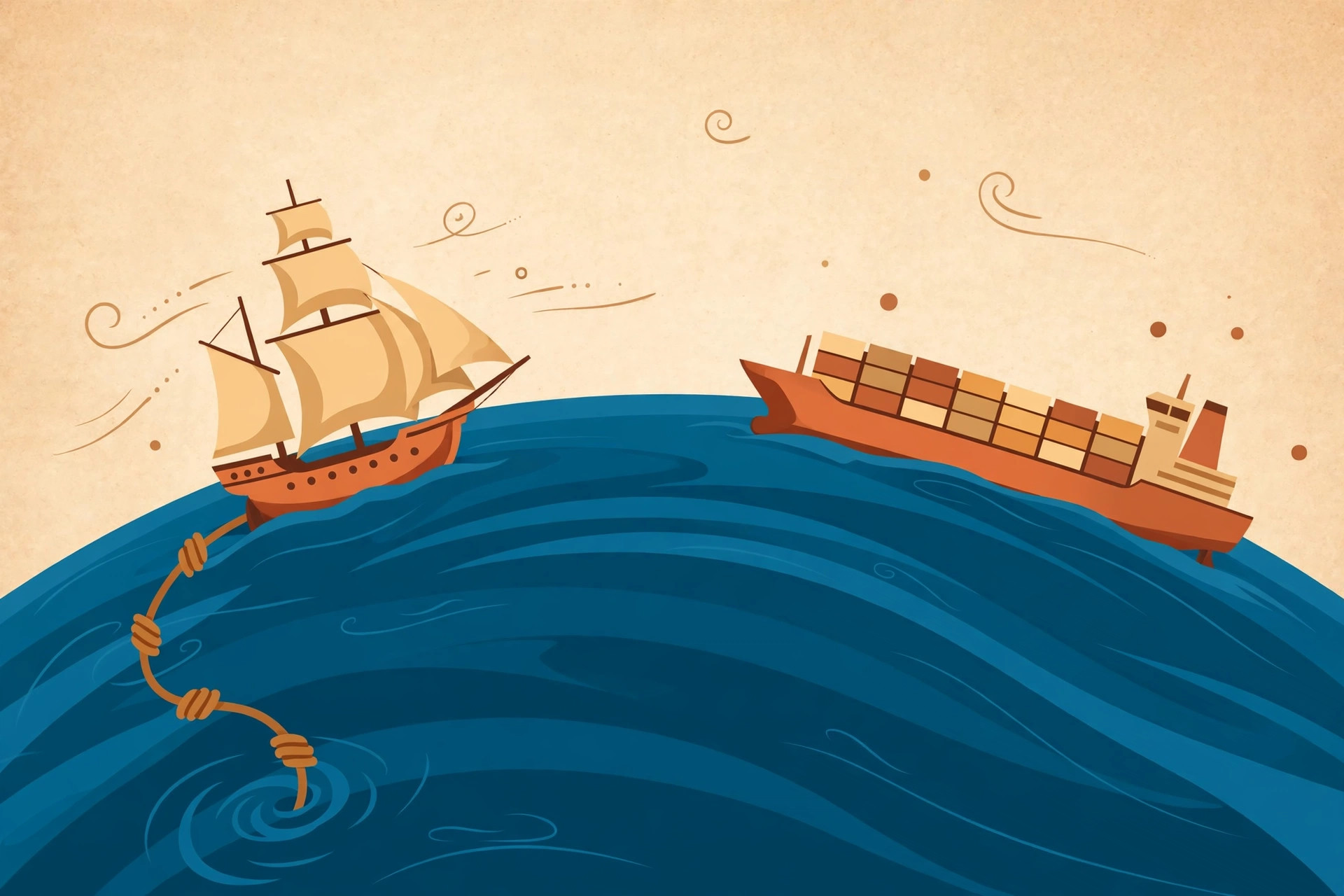
A knot is one nautical mile per hour. The name is literal: sailors once measured speed by paying out a rope with knots tied at measured intervals over the stern, counting how many knots ran out while a sandglass emptied. The log line gave the ship speed in knots, and the word never left. A modern container ship cruises near 20 knots, about 37 kilometres per hour; a fast ferry may reach 40. Aircraft also report wind and speed in knots, because their charts share the nautical mile and its tidy link to the grid.Aircraft altimeters and charts keep the nautical system because a minute of arc is a minute of arc in every country, needing no translation at borders, which at 900 kilometres per hour arrive frequently.
Why the pair survives
Roads went metric or imperial long ago, but the sea and the sky kept their own system because it is woven into the charts, the instruments and the training of everyone who uses them. Changing would risk lives for tidiness. The pair also has a genuine elegance: at one nautical mile per minute of latitude, mental arithmetic at sea becomes counting. The speed converter on this site includes knots alongside kilometres and miles per hour, and the distance tools report nautical miles with every result, so the translation is always one glance away.The log line survives in language long after the rope vanished: ships still keep a log, still record speed in knots, and still ring changes of the watch by bells that once timed the sandglass.