Planning a Walk with Map and Compass
From map to ground
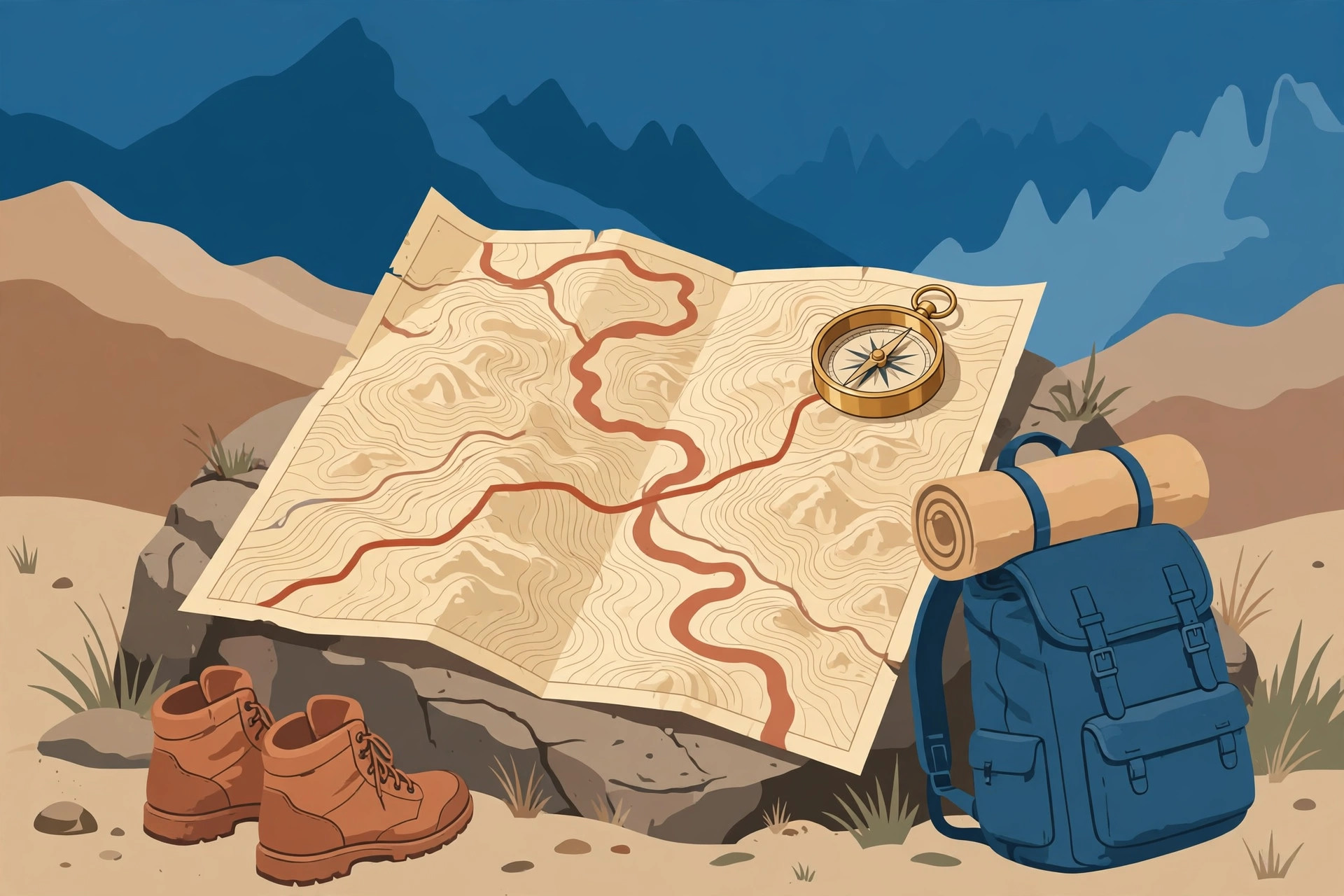
The core skill is transferring a direction. On the map, lay the compass edge along your route, turn the housing until its lines match the map grid north, and read the bearing at the index line. Then add or subtract the local magnetic declination, the gap between grid north and the needle north, which the map margin states. On the ground, turn yourself until the needle sits in its gate, and the direction of travel arrow points your way. It sounds like a ritual because it is one, and the ritual exists because every step corrects an error that has genuinely lost people in fog.Magnetic declination in Britain is small enough that many walkers ignore it and survive, but learning the correction where it costs nothing is what makes it available where it costs everything.
Why the skill still matters
Phones die, screens wash out in bright sun, and a GPS position is not a direction of travel. Rescue teams repeat the same story: a party with a dot on a map screen and no idea which way to walk. A compass bearing taken before the mist closed in answers the only question that matters. The technique also disciplines route planning on paper: legs are chosen between features that can be identified in poor visibility, distances are paced or timed, and the bearing for each leg is written down in advance, in the warm, rather than invented on the hill.A bearing is only as good as the point it was taken from, so the companion skill is confirming your start: a junction, a bridge, a contour feature you can name before the compass comes out.
Practising the pieces
Each element can be rehearsed separately. Pace counting calibrates your hundred metre stride on flat and rough ground. Timing legs at your Naismith pace tells you when a feature is overdue. The bearing calculator on this site works between coordinates, which suits planning between known points, and the compass point guide explains the named points you will hear in forecasts and older guidebooks. Put together on a modest hill in kind weather, they build the confidence that the full system deserves: simple tools, honestly used, that have guided walkers home for a century and a half.Clubs teach the whole sequence in an evening on a local hill, and it is among the cheapest insurance in the outdoors: one evening of practice for a lifetime of fog proof confidence.