Solstices and Equinoxes: The Hinges of the Year
The turning points of the sun
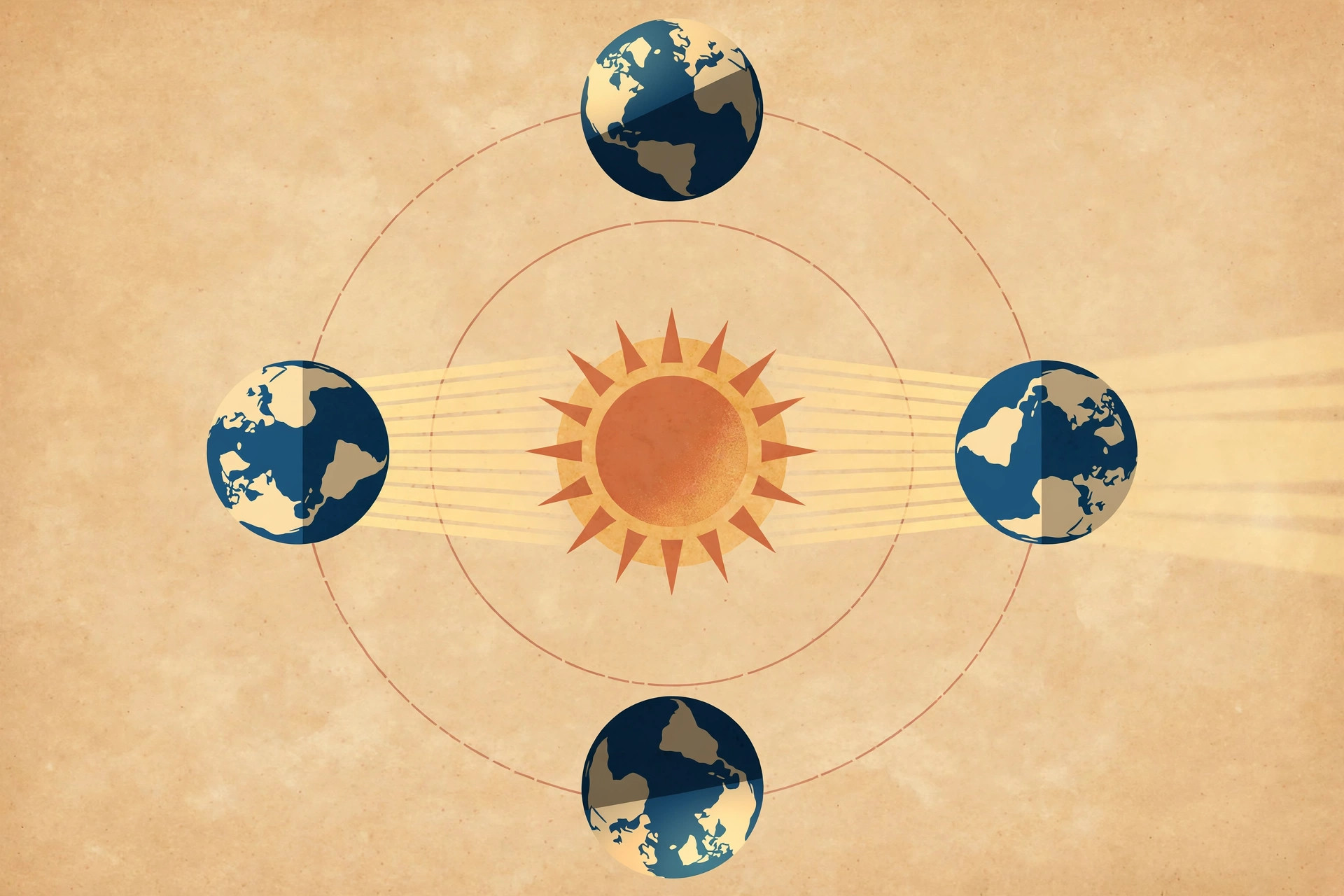
Twice a year the sun reaches the end of its apparent journey north or south and turns back. The June solstice, around the 21st, gives the northern hemisphere its longest day and the southern hemisphere its shortest; the December solstice reverses the gift. On those days the sun stands over the tropics: over Cancer in June at about 23.4 degrees north, over Capricorn in December. The exact moment is an instant in the orbit, not a whole day, and its date wanders between the 20th and 22nd because the calendar year and the orbit year are not the same length.The solstice sunrise and sunset are not the extremes of the clock: the latest sunrise and earliest sunset of the year fall on neighbouring dates, pulled apart by the equation of time.
The balance points
At the March and September equinoxes the sun crosses the equator and day and night are close to equal almost everywhere, which is what the name equinox, equal night, promises. Close, but not exact: thanks to the atmosphere lifting the image of the sun and sunrise being counted from its top edge, the day of truly equal light falls a few days before the March equinox and after the September one at mid latitudes. The equinoxes also mark the only days when the sun rises exactly in the east and sets exactly in the west for every place on Earth.Agriculture once ran on these hinges: lambing, sowing, harvest and the great fairs of the year were pinned to them, and many a market town still holds its fair on a date set by a solstice centuries ago.
Markers in stone and habit
Solstices and equinoxes are the oldest dated events in human culture. Stonehenge frames the June solstice sunrise, Egyptian temples catch equinox light, and festivals of midwinter and midsummer still cluster on the dates long after their astronomical meaning faded from common knowledge. Farmers used them as the hinges of the working year. They remain the cleanest way to feel the mechanics of the seasons: stand at a fixed viewpoint on the solstices, note where the sun rises against the horizon, and the full swing of the year is laid out in front of you.Astronomers mark the moments precisely because the whole calendar hangs off them; the tropical year measured solstice to solstice is the year our seasons actually keep.