The Carbon Cost of Flying
Where the number comes from
A flight carbon figure starts with fuel. A long haul jet burns roughly three litres of fuel per hundred passenger kilometres when full, and each litre burned releases about 2.5 kilograms of carbon dioxide from the fuel itself, with more from producing and delivering it. Governments publish conversion factors that wrap this into a single figure per passenger kilometre: around 0.11 kilograms on long routes and nearer 0.16 on short ones in economy, the pattern the calculator on this site follows. Multiply by the great circle distance, adjusted a little for real routings, and you have the estimate for one seat.Aviation is a few percent of world emissions but a large share of the footprint of those who fly often, which is why one long return trip can outweigh a year of careful habits elsewhere.
Why short flights are thirstier
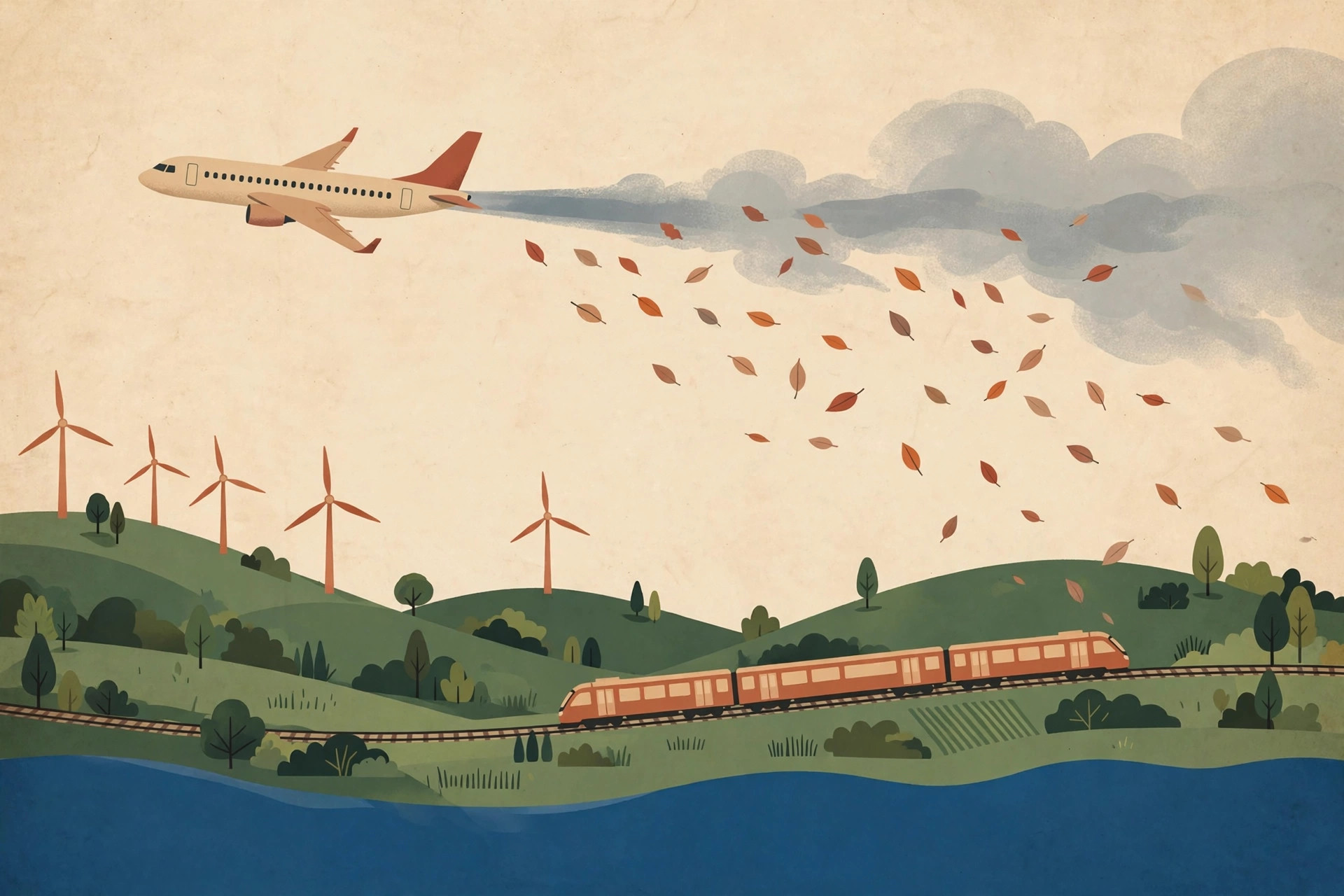
Take off and climb burn fuel at a furious rate while covering little ground, and a short flight spends much of its life in that phase. A 400 kilometre hop can therefore emit nearly twice as much per kilometre as a long haul sector flown by the same family of aircraft. Short flights also compete with trains, which on electrified lines emit a small fraction per passenger, a comparison that has pushed several countries to restrict the shortest domestic routes where a fast rail alternative exists. The per kilometre curve, not any single flight, is the honest way to see it.Newer aircraft burn noticeably less per seat than the generation they replace, and load factors keep rising, so the per passenger figures improve slowly even as total flying grows.
Cabins, loads and honest limits
A business class seat occupies roughly three times the floor area of an economy seat, so it carries roughly three times the share of the fuel; first class nearer four times. Load factor matters too: an empty seat still flies, and its share is divided among those aboard. The figures here cover carbon dioxide from fuel burn, the part that can be measured well. Flying also warms the climate through contrails and high altitude effects that scientists estimate add significantly on top, by an amount still argued over, so treat any single number as a floor for comparison, not a verdict.The calculator is best used comparatively: this route against that one, flying against the train, one trip against two. Comparisons are where an indicative number earns its keep honestly.